
by Youssef Elbeqqal · September 27, 2026
Why Automation Projects Stall After the Pilot
TL;DR
An agency's first automated workflow usually works well enough on the one client it was built for, then stays exactly that size for months because it was never handed to the person who'd actually run it elsewhere and never tested against a messier account than the one it launched on. A pilot is ready to scale when someone besides its builder can run it on a different client, not when it works once.
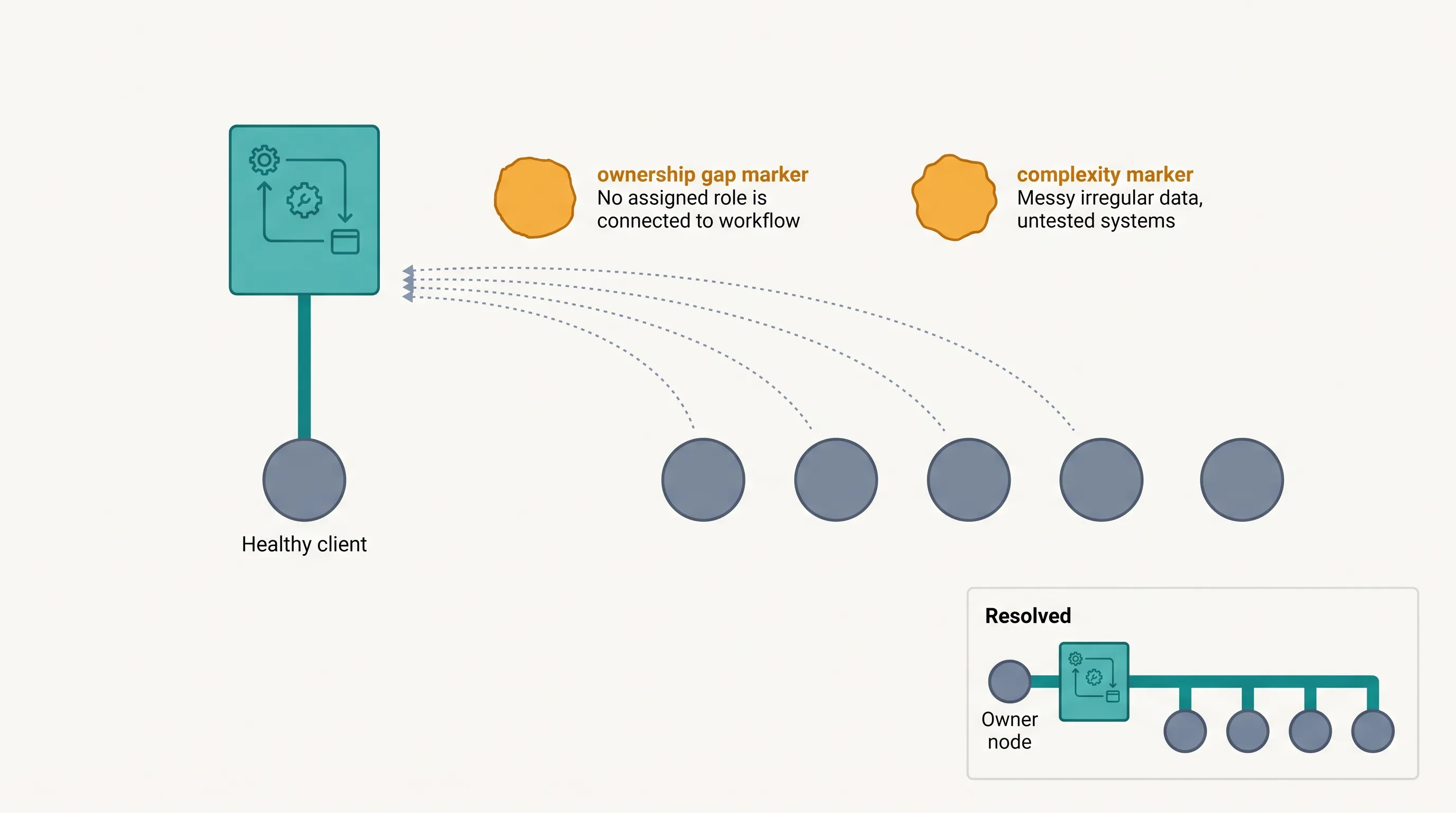
The first automated workflow almost always works. Someone automates status reporting for one client, it holds up fine for a few weeks, and everyone agrees this should happen everywhere. Six months later, it's often still running for just that one client. Nothing broke. It just never left the pilot.
Why the pilot working isn't the same as being ready
AI Assembly Lines lists the specific mistakes mid-market companies make here, and two translate directly to agency work. First, pilots run on curated, hand-picked conditions that don't match everything else: "85% of all AI projects fail due to poor data quality," and a pilot built on one client's clean, simple account structure hasn't been tested against the messier ones. Second, the people who'd actually run the thing day to day usually weren't part of building it: "70% of change programs fail due to employee resistance and lack of management support," which in an agency looks like account managers who were never shown how the automation works and have no reason to trust output they didn't build.
The ownership gap nobody assigns
The same source cites a third factor: "only 21% of organizations have a mature governance model" once a pilot concludes, meaning nobody owns deciding what happens next. For an agency, that's the automation staying in the personal workflow of whoever built it, instead of becoming something the team runs. The same gap shows up whenever no one owns the whole client account: a system with no assigned owner doesn't expand on its own, regardless of how well it worked the first time.
What actually proves a pilot is ready
The real test isn't whether the pilot worked, it's whether someone besides the person who built it can run it on a different client without that person in the room. That's a higher bar than "it worked once," and it's the same bar human-in-the-loop automation depends on: if a person still has to review the output before it reaches a client, that review needs to hold up against a messier account too, not just the clean one the pilot launched on.
Applying it to the next rollout
Before calling a pilot done, hand it to someone who didn't build it and point it at the least tidy client on the roster. The same two-question test for what's safe to automate applies here: if the pilot only holds up under ideal conditions, it isn't finished, it's just working once. See how workflow design gets a pilot ready for every client it needs to run on, not just the first one.