
by Youssef Elbeqqal · September 19, 2026
A Simple Test for What to Automate vs. What Needs a Human
TL;DR
A task is safe to automate when it's repeatable and a mistake in it is cheap to fix, but for agency work that second question needs a stricter answer: if a client ever sees the output, treat the cost of a mistake as high regardless of how routine the task looks. Automate the repetition behind that output, keep a human on anything a client's eyes land on.
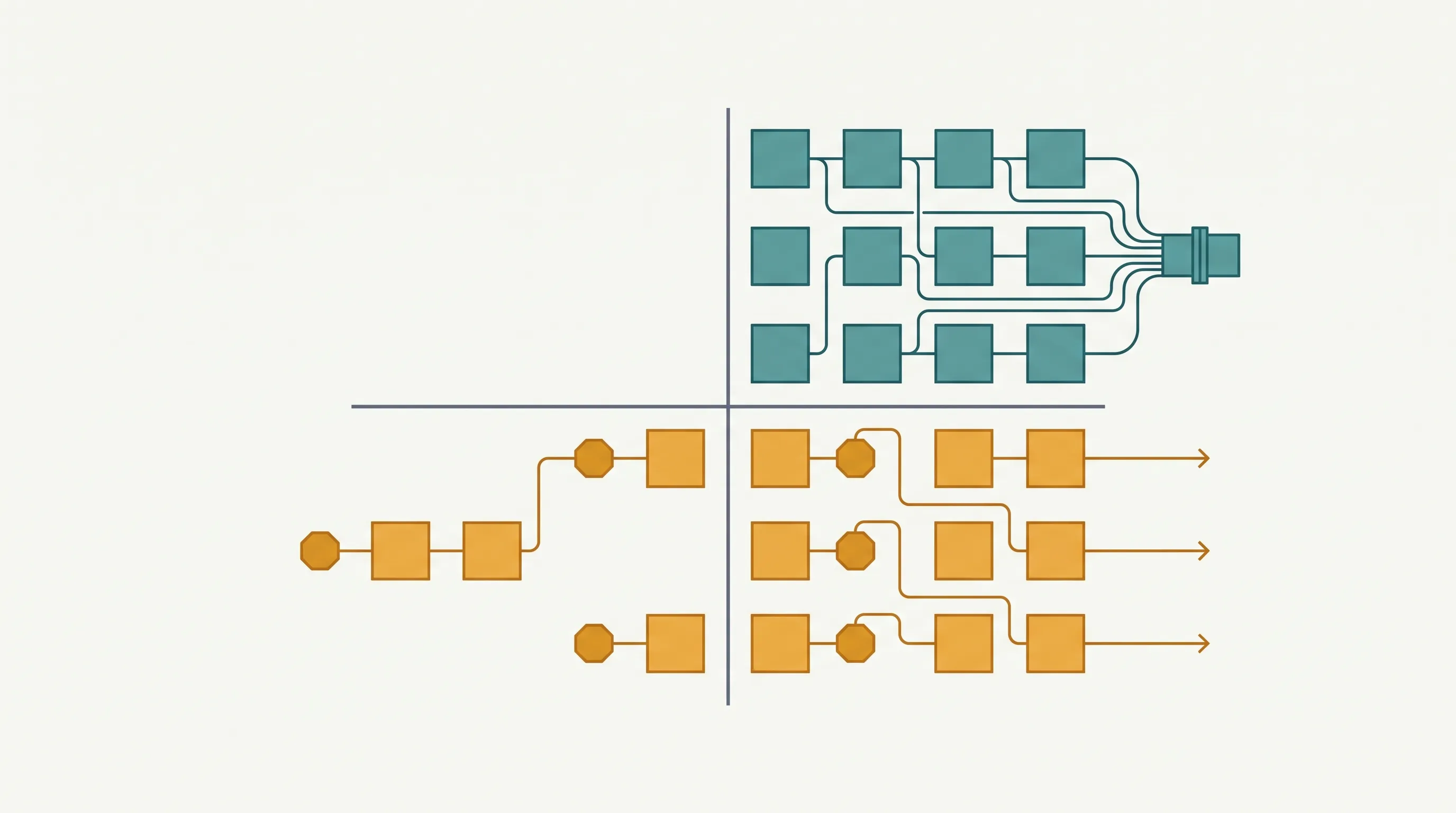
Most automation frameworks score a task on two axes: how repeatable it is, and how expensive a mistake in it would be. High repeat, low mistake cost, automate it. Low repeat, high mistake cost, leave it to a person. RedHub AI's back-office framework sums up the rule in one line: automate the repetition, keep the judgment.
Where the test needs a stricter rule for agencies
That two-axis test works fine for internal admin work, but it breaks down the moment a task's output is something a client actually reads. A weekly status email is repeatable and looks low-risk by the framework's own logic, right up until it goes out with the wrong client's name in it or a number that doesn't match what was actually delivered. The mistake is cheap to produce and expensive to have happened. For agency work, the fix is to stop scoring "cost of a mistake" on the task itself and score it on who sees the result: if a client's eyes land on the output, the cost defaults to high no matter how routine the underlying steps are. That's the same logic behind why agencies shouldn't fully automate client-facing work and what human-in-the-loop automation actually means in practice: automate what builds the report, keep a person on what sends it.
The harder problem is finding the task at all
Summit Trails' Wendy Kinney points at the actual bottleneck in this process: "the criteria are easy and widely known. The hard part is locating those tasks, because they are blended into roles and hidden from org charts." An account manager's job title doesn't tell you they spend four hours a week retyping the same client fields into two different tools. That work only shows up when someone tracks what a role actually does hour to hour, not what its title implies.
Applying it to agency ops specifically
Run the test in two passes. First, list what a given role actually does in a normal week, not what the job description says. Second, for each item, ask whether a client ever sees the direct output. If yes, that step stays human no matter how repeatable it is, but the steps that feed into it (pulling status from ClickUp, pulling numbers from Airtable, formatting the draft) are exactly the kind of copy-paste work worth automating first. If no, score it on repeatability and mistake cost like any other back-office task.
What this changes in practice
This is the same principle behind Automatoro's framework for automating the boring 80% of agency ops: the automatable 80% is everything that happens before someone is ready to hit send. The client-facing moment itself was never part of that 80%. Run a role through this two-pass test before deciding it's "too client-facing to touch," and see how workflow design draws that line in practice.