
by Youssef Elbeqqal · September 8, 2026
When Multi-Stakeholder Approvals Stall
TL;DR
When three stakeholders all need to sign off before work ships, the notification-and-status fix that works for a single approver stops being enough. The real failure mode is diffusion of responsibility: everyone assumes someone else already said yes. Naming a single current blocker and sequencing gating approvals ahead of parallel ones fixes what a group thread can't.
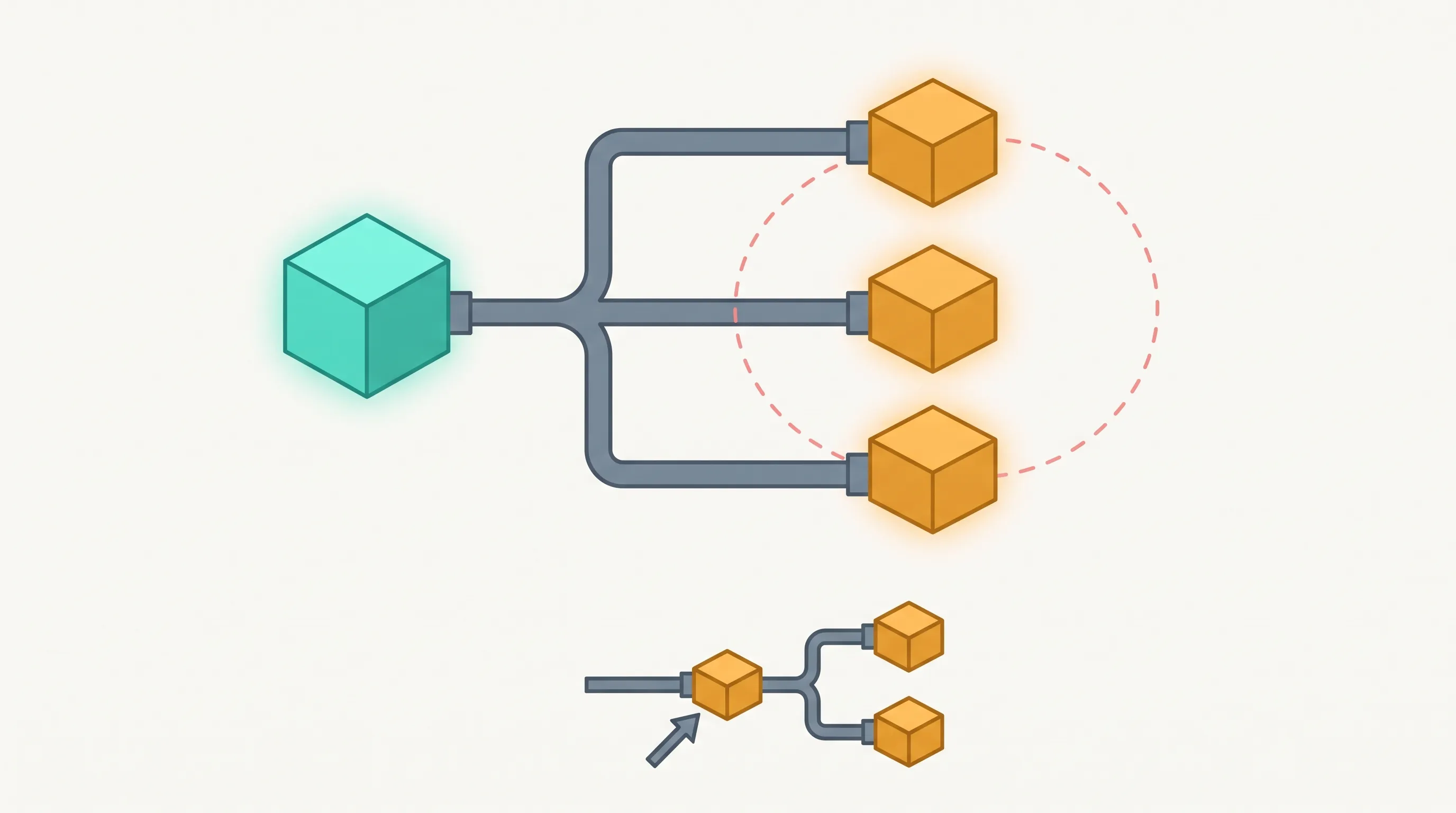
Some approvals have one decision maker. Others have three: a marketing manager, legal or compliance, and a VP who all need to weigh in before anything reaches the client's actual customer. That's not the same problem as a single slow approver, and it doesn't have the same fix.
Why the single-approver fix doesn't cover this
Notifying one person the moment work is ready, then tracking one status change, solves the bottleneck when one person holds the decision. With three stakeholders on the same approval, the open question isn't just "has anyone looked at this," it's "who exactly is the reason this hasn't shipped yet" - and a group thread rarely answers that.
The diffusion-of-responsibility problem
This has a name in social psychology, and it's well documented outside of approval workflows too: in the classic Darley and Latané experiment, 85% of people helped when they thought they were the only one who could, but only 31% did when they believed others were also in a position to act. The same page notes how this shows up at work: accountability disappearing into "a cloud of shared emails, vague roles, and endless CCs." A three-person approval thread is exactly that setup - each stakeholder can reasonably assume one of the other two already said yes.
Sequential vs. parallel, and why it matters
Not every stakeholder needs to review at the same time. If legal or compliance can disqualify something outright, that review should gate the process first, before the marketing manager and VP spend time on a version that might not survive it. Reviews that are genuinely independent of each other, like a VP's brand-fit call and a manager's tactical read, can run in parallel once the gating review clears. Treating every approval as either fully sequential or fully parallel wastes rounds either way.
What actually fixes this
The fix isn't a bigger notification, it's a specific one: track a single named current blocker at each stage, not a blanket ping to everyone on the thread, and escalate to that person specifically once they've been the blocker past some threshold. Everyone reviewing the same canonical version, instead of forked copies passed around by email, removes the other common failure: sign-off on a version that's already out of date.
How this fits with the rest of agency ops
This is a sharper version of the same approval bottleneck that costs agencies billable hours - the more stakeholders in the loop, the more it needs explicit ownership instead of implicit trust that someone else has it covered. See how workflow design handles approval routing with more than one decision maker in the loop.