
by Youssef Elbeqqal · September 25, 2026
When a Client's Main Point of Contact Changes Mid-Project
TL;DR
When a client's own point of contact leaves mid-engagement, the agency relationship often doesn't survive the transition to whoever replaces them, because the new contact inherits none of the context the original relationship was built on. That context needs to live in the project record, not in the departed contact's inbox, or the agency starts over with someone who has no reason to trust it yet.
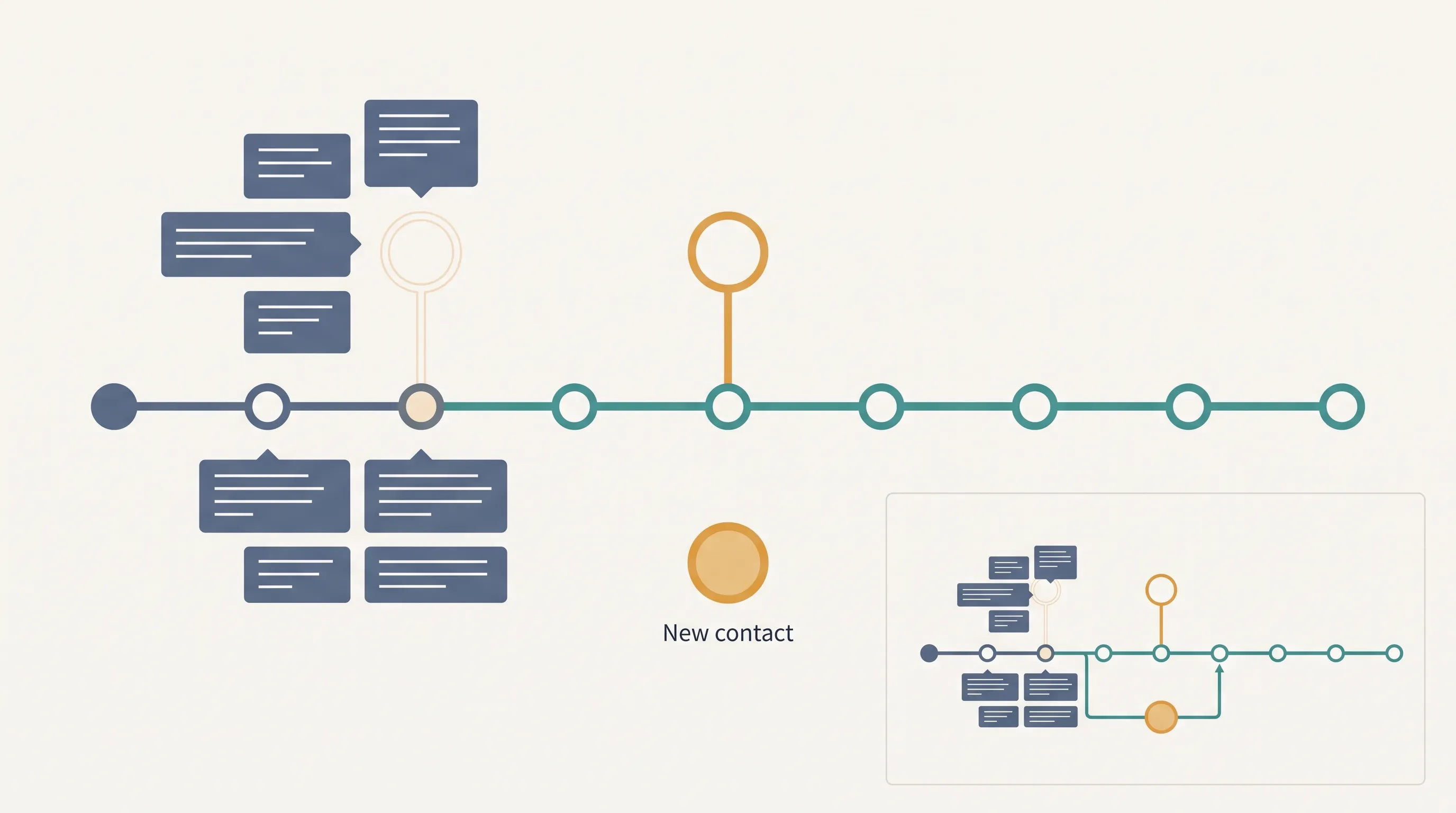
Focus Digital's Chase McGee names a specific, high-impact churn driver that has nothing to do with the agency's own work: "when a client's marketing director departs, the agency relationship often fails to survive the transition to new leadership". Nobody missed a deadline. Nothing was under-delivered. The account still ends, because the person who understood why the engagement existed left the building.
The size bracket where this actually matters most
McGee's churn data by agency size puts 11-to-25-employee agencies at 24% annual churn and 26-to-50-employee agencies at 19%, both meaningfully better than sub-10-employee agencies at 32%. Growing past that early-stage churn rate doesn't make stakeholder turnover stop happening, it just means more of an agency's remaining churn risk comes from exactly this kind of loss rather than from the agency's own mistakes.
What the departing contact actually took with them
The new contact didn't inherit a bad relationship, they inherited none of one. The original scope conversation, the goals that got agreed to before a contract existed, the reason a particular approach was chosen over another, all of that lived in a relationship between two people, and only one of them is still around. Whatever wasn't written into the project record left when they did.
The same gap, later in the relationship
This is the same failure mode as the sales-to-delivery handoff gap, just happening months into an engagement instead of at the start of one. In both cases, the information that matters lived in a person's head or inbox instead of a record the next person could actually open. When no one owns the whole client account either, that gap gets worse: three specialists can each explain their own slice to a new contact, but nobody hands over the whole picture at once.
What changes the outcome
None of this means automating the relationship away. A new stakeholder still needs an actual person walking them through where things stand and why. What changes the outcome is whether that person can pull the real history in minutes; the original scope, the goals, the decisions already made, instead of reconstructing it from memory and old email while the new contact is deciding whether this agency still makes sense. The same record that should carry a client through onboarding is what carries them through a stakeholder change too, since it's the same information, just needed again later.
Where this fits into the bigger picture
This is the practical version of automating the boring 80% of agency ops: keep a system of record accurate enough that losing one person on the client side doesn't mean starting over. See how workflow design keeps that record current before the next contact change puts it to the test.