
by Youssef Elbeqqal · October 1, 2026
The Revenue-Per-Employee Line That Signals You're Overstaffed, Not Understaffed
TL;DR
Revenue per employee below $120,000 usually signals overstaffing, underpricing, or too much non-billable drag, and an agency can hit that line even while its total revenue is growing, if headcount is growing faster. The number that matters isn't whether revenue went up, it's whether each added person made the agency more productive or just diluted it.
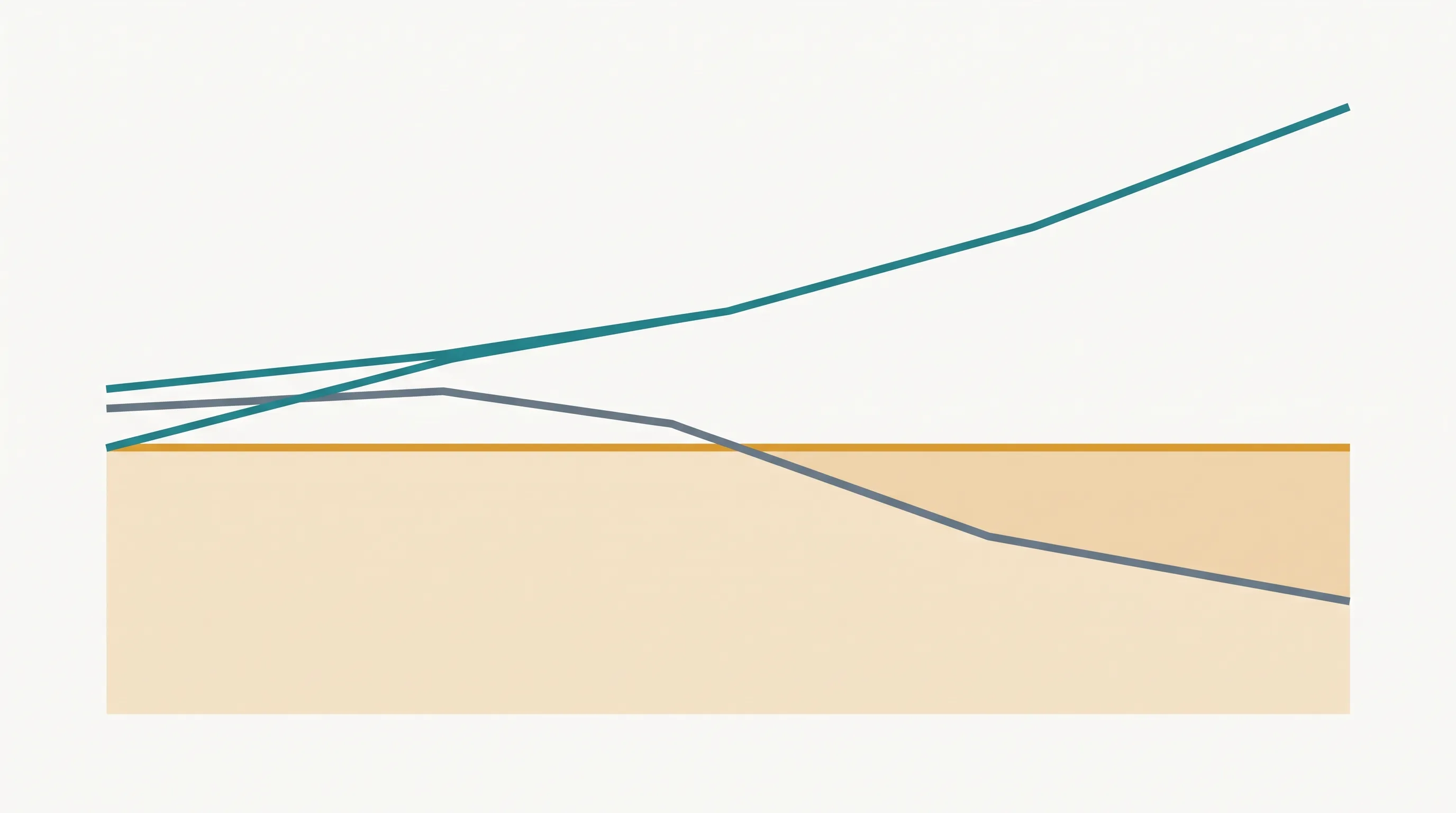
CPA Igor Tutelman lays out the diagnostic in one line: "an agency that grows from $2M to $3M in revenue while headcount grows from 12 to 20 people has become less productive per person, regardless of how the top line looks." Revenue went up 50%, headcount went up 67%. That's growth on paper. On the ratio that actually predicts trouble, this agency is worse off than before it hired.
The line that separates functional from structural
Tutelman's benchmarks give the ratio actual meaning: below $120,000 in revenue per employee "typically signals a structural problem, overstaffing, significant underpricing, or too much non-billable drag." $120K to $160K is functional but compressed, with little cash cushion. $160K to $220K is where well-run agencies tend to sit. His worked example shows how fast the line moves: a $2.2M agency at 12 FTEs sits at $183K per employee, comfortably healthy. The same agency at 15 FTEs drops to $147K, a materially different, more fragile position, without a single dollar of revenue changing.
Where a 20-to-50-person agency actually lands
Run the math for that range specifically, 20 to 50 employees, $3M to $12M in revenue: the small end lands at $150,000 per employee, right in the compressed band. The large end lands at $240,000, into the range Tutelman flags as strong pricing power. That's a wide spread for the same rough headcount bracket, and most agencies in this range are closer to the compressed end than they'd guess, which means a bad quarter of hiring is enough to cross into the structural-problem zone, not just a bad quarter of sales.
The ratio hides two different problems
A low number doesn't always mean too many people. It sometimes means the right number of people spending too much of their week on work that isn't billable: status chasing, retyping client data, assembling reports by hand. The hiring trap covers the first case, where the fix is fewer people. This ratio also catches the second case, where the team is the right size and the fix is freeing up the hours already being paid for, the same math behind how many clients one account manager can actually carry before admin work eats the capacity a client relationship needs.
Reading the number correctly
Before treating a slipping ratio as a hiring-freeze signal, check what the added headcount is actually doing with their time. If it's billable client work, the ratio will recover as those people ramp up. If it's absorbing the same manual busywork a system should be doing, more headcount won't fix the ratio, it'll just repeat it at a larger scale. See how workflow design recovers billable capacity without adding a line to payroll.